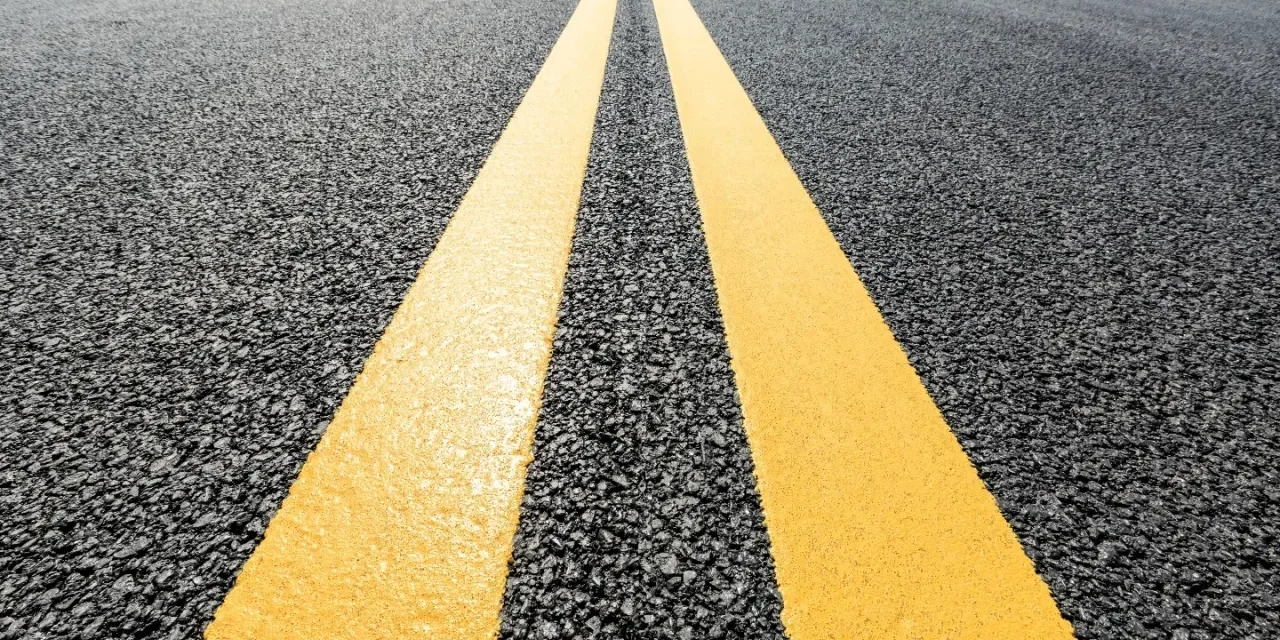
Surface markings play an essential role in creating clear, visible lines across a wide range of environments. Whether marking tramlines on tennis courts, creating parking bays in car parks, or separating areas in playgrounds, surface markings help ensure safety, organisation, and accessibility.
Read on to discover everything you need to know about road markings, including the various types of road markings and the best techniques for achieving professional results.
Road Markings
Road marking paint can be applied through various techniques, including spray, brush, roller or thermoplastic methods, to create specific markings like lines, symbols and arrows.
Several types of road markings are commonly used to guide road users, playing a crucial role in traffic management and ensuring safety. These markings help to organise and direct vehicles, pedestrians, and cyclists, reducing confusion and potential hazards.
Some of the most common road markings include
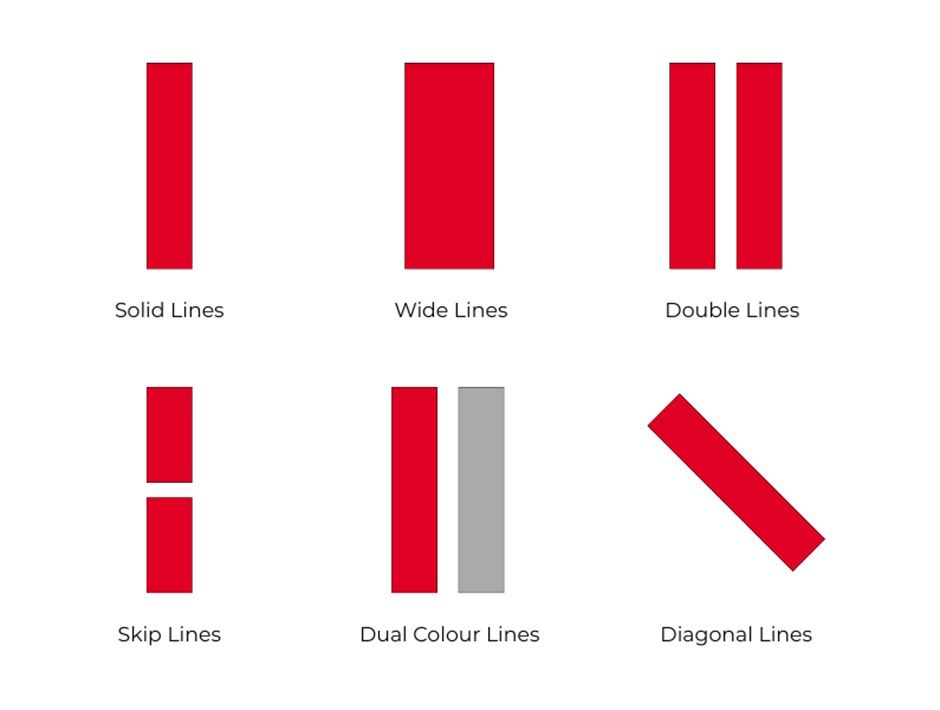
Solid Lines
Solid lines, typically 100 to 150mm in width, are among the most common and versatile road markings. They are often used as longitudinal markings, indicating parking bays or guiding drivers on where to position their vehicles on the road. These lines are usually painted in white or yellow and can be applied with most standard line stripers, providing clear demarcation for traffic flow and road safety.
Wide Lines
Wide lines, generally upto to 50cm in width, create more prominent markings, often used for stop lines or pedestrian crossings. Due to their size, a single spray gun typically cannot achieve this width. Instead, a line striper equipped with two spray guns is required. The guns should be positioned closely together, ensuring they create converging lines rather than two separate ones, providing clear and easily visible boundaries for motorists and pedestrians.
Double Lines
Double lines come in various forms, such as a combination of solid and skip lines or two solid lines placed side by side. Double lines are commonly used to separate lanes or indicate restricted areas, helping to manage traffic flow and prevent unsafe overtaking. These markings can be applied with a single striper head by covering the area twice or with a two-head striper, positioned slightly apart to produce two distinct lines.
Skip Lines
Skip lines consist of a series of broken segments, typically used to separate traffic lanes and help drivers maintain a clear path while avoiding oncoming traffic. Automatic line stripers are ideal for creating skip lines, as the automatic start-stop function ensures uniformity in both the length and spacing of the lines, enhancing their effectiveness in guiding traffic safely.
Diagonal Lines
Diagonal lines are typically used to mark non-driving zones, such as areas to be kept clear for safety reasons. These markings are often created by arranging solid lines in a diagonal pattern across the surface. Road marking equipment with adjustable spray tips is particularly useful for this application, as it allows for precise spraying at specific angles, ensuring accurate and consistent diagonal patterns that are easily visible to road users.
How to Apply Road Marking Paint
When it comes to road markings, proper application of road marking paint is crucial to ensure that the markings are clearly visible and easily understood by road users. Accurate and consistent markings guide individuals to take specific actions, such as stopping or changing lanes. Even a slightly crooked or broken line can lead to confusion and pose safety risks.
To help you achieve precise and effective road markings, we’ve outlined a step-by-step guide below, covering everything from preparation to application, ensuring your markings are both clear and durable.
Step 1: Choose Your Paint
Selecting the right road marking paint is essential, as different types offer varying levels of durability, visibility, and cost-effectiveness according to the surface to which they are applied
For temporary markings, such as those in construction zones, water-based paints are a suitable choice due to their ease of application and short-term nature. Solvent, Polyurethane, or Epoxy paints, are ideal for permanent markings in playgrounds sports areas and low traffic areas. In high-traffic areas, Thermoplastic paint or preformed thermoplastic products provide greater durability and enhanced reflectivity.
Consider your specific needs and consult with your road marking product supplier to determine which paint type will best suit your requirements.
Step 2: Prepare the Area
Before applying any paint, it’s important to prepare the surface properly. Begin by thoroughly cleaning the area to remove any dirt, oil, debris, or dust. These contaminants can interfere with paint adhesion and compromise the longevity and effectiveness of the markings.
Step 3: Apply a Primer
In situations where adhesion may be a concern, applying a primer can significantly strengthen the adhesion between the road surface and the paint. This is particularly important for surfaces with low porosity or contamination, ensuring a robust, longer-lasting marking.
Step 4: Apply the Paint
As explained previously, the techniques and pieces of equipment required to apply road marking paint can depend on the type of paint you’re using. Options include spraying machines, extrusion devices, or hand tools, each designed to deliver consistent and accurate results. Ensure the correct equipment is used for your chosen paint type to achieve the desired result.
Step 5: Allow to Dry/Set
After applying the paint, it’s crucial to allow sufficient cooling/drying time before the area is used. Drying times can vary depending on the paint type, environmental conditions, and the thickness of the application. The advantage of thermoplastic type paints is they cool and set off quickly allowing use of the area very quickly. Avoid using the area prematurely, as walking or driving on the freshly painted surface could result in smudged markings, requiring the paint to be removed and reapplied.
Sportsmark’s Road Marking Products, Equipment and Services
At Sportsmark, we offer road marking services for a variety of situations, including the installation of markings for car parks, playgrounds, and sports courts. With a focus on safety and quality, we proudly serve local authorities, schools, and commercial clients, providing clear and professional line markings. Whether you require a thermoplastic application, paint or tape, our expert team is trained to perform various techniques according to your needs.
Alternatively, we also offer a wide range of high-quality road marking products and road marking equipment. These supplies include paints, stencils, and applicators, providing our customers with all the supplies they need for durable and visible markings on surfaces such as concrete, asphalt, and tiles.
Whether you are interested in our complete road marking services or purchasing our road marking products and equipment to perform the road marking process yourself, contact Sportsmark today!